
Most people assume that owning fewer clothes means sacrificing style. The reality is the opposite. Why minimalism works in fashion comes down to a counterintuitive truth: constraints sharpen creativity, and a curated wardrobe builds more confidence than a packed closet ever could. A 3-week capsule wardrobe study found increased subjective happiness alongside sustained fashion involvement, meaning participants felt more stylish, not less. If you’re building a streetwear identity that actually feels like you, minimalism isn’t a compromise. It’s the foundation.
Table of Contents
- Understanding minimalism in fashion: beyond simplicity
- The psychology of minimalism: stress relief and decision fatigue
- Financial and sustainability advantages of a minimalist wardrobe
- Minimalism vs. fast fashion and quiet luxury: a style and value comparison
- How to embrace minimalism in your streetwear wardrobe
- Why minimalism in fashion is a creative freedom, not a limitation
- Discover minimalist streetwear essentials at Blaq Aesthetics
- Frequently asked questions
Key Takeaways
| Point | Details |
|---|---|
| Minimalism boosts happiness | Owning fewer, versatile fashion pieces reduces stress and enhances overall well-being. |
| Save money long-term | Investing in quality items lowers clothing costs by 45% compared to fast fashion. |
| Reduce decision fatigue | Minimalist wardrobes cut daily outfit decisions from 10–15 minutes to under 2 minutes. |
| Sustainability benefits | Fewer purchases and durable clothing significantly reduce environmental impact. |
| Express identity effectively | Minimalism creates a consistent style canvas that supports personal expression through subtle details. |
Understanding minimalism in fashion: beyond simplicity
Minimalism in fashion gets misread constantly. People picture beige linen and nothing else. But the real definition is sharper than that: own fewer pieces, choose them deliberately, and make sure every item earns its place in your rotation. That’s it. The aesthetic can be clean and monochromatic, or it can be streetwear-forward with bold graphics and oversized silhouettes. What matters is curation, not color.
The principles of minimalist fashion rest on three things: quality over quantity, versatility over novelty, and personal identity over trend-chasing. A well-chosen graphic tee that you wear 40 times a year is more minimalist than five mediocre ones you wear twice each. The focus shifts from “how much do I have?” to “how well does what I have work for me?”
Here’s what minimalism in fashion actually prioritizes:
- Fewer, higher-quality pieces that hold up across seasons and wears
- Versatile silhouettes that mix across multiple outfits without effort
- A consistent personal aesthetic that communicates who you are without needing to explain it
- Mindful purchasing that replaces impulse buying with intentional additions
The minimalist streetwear style approach works especially well for this because streetwear already leans on strong silhouettes, neutral bases, and statement pieces that do the talking. You don’t need 60 items when 30 well-chosen ones cover every situation. Research backs this up too: minimalist behavior positively affects happiness by countering the diminishing returns of overconsumption, where more stuff stops adding satisfaction and starts adding noise.
The psychology of minimalism: stress relief and decision fatigue
Decision fatigue is real, and your wardrobe is one of its biggest triggers. Every morning you spend staring at a cluttered closet, you’re burning cognitive energy before your day even starts. That energy doesn’t refill for free. It comes at the cost of focus, mood, and creative thinking later in the day.
Fashion psychologist Dr. Dion Terrelonge explains it directly: uniform dressing alleviates stress from decision fatigue, freeing mental space and boosting both creativity and confidence. When you’re not negotiating with yourself every morning about what to wear, that mental bandwidth goes somewhere more useful.
“The clothes you wear daily should serve you, not stress you. A consistent wardrobe isn’t boring. It’s a system that lets your mind focus on what actually matters.”
The numbers make the case clearly. Capsule wardrobes reduce daily outfit decision time from 10 to 15 minutes down to about 90 seconds. Over a year, that’s more than 60 hours returned to you. That’s not a small thing.
Here’s how minimalism builds psychological advantages step by step:
- Reduce the options. Fewer choices mean faster, more confident decisions each morning.
- Build a cohesive palette. When everything works together, there’s no bad combination, which removes anxiety entirely.
- Repeat what works. Wearing pieces you love repeatedly reinforces your self-image and builds a recognizable personal style.
- Free up mental space. The cognitive energy saved goes toward creative thinking, work, and the things that actually define your day.
Adding versatile long sleeve tees to your rotation is a practical first step. A single piece that layers under a hoodie, works alone, and transitions across seasons is doing more work per square inch of closet space than most people’s entire shelf of impulse buys.
Financial and sustainability advantages of a minimalist wardrobe
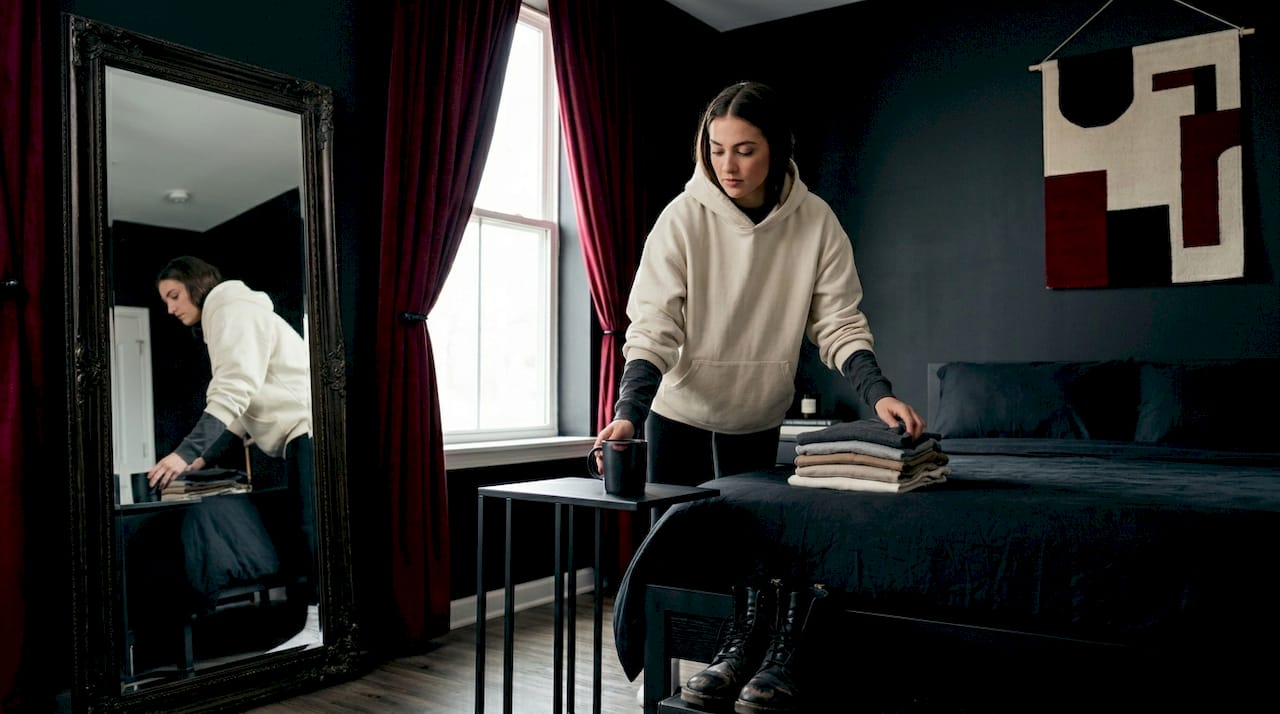
The financial case for minimalism is one of the most underappreciated arguments for it. People see a $90 hoodie and compare it to a $25 fast fashion version. That comparison ignores cost-per-wear, which is the only number that actually matters. If the $90 hoodie lasts three years and you wear it 150 times, that’s $0.60 per wear. If the $25 version falls apart after 20 washes, you’re paying $1.25 per wear and doing it again next season.
Minimalist wardrobes save $7,550 over five years and reduce annual clothing spend by 45% compared to fast fashion habits. That’s not a marginal difference. That’s a vacation, a rent payment, or a serious investment.
| Factor | Fast fashion approach | Minimalist wardrobe |
|---|---|---|
| Annual spend | High, frequent purchases | Lower, deliberate investment |
| Cost-per-wear | High due to low durability | Low due to longevity |
| Wardrobe size | 60+ items, low rotation | 30 to 35 items, high rotation |
| Decision fatigue | Daily struggle | Minimal friction |
| Environmental impact | High waste, high emissions | Reduced footprint |
The environmental side is just as significant. The fashion industry contributes 10% of global carbon emissions, and capsule wardrobes directly reduce that footprint by cutting the demand that feeds overproduction. Every piece you don’t buy from a fast fashion brand is one less item in a landfill within 18 months.
Benefits of minimalism in fashion from a sustainability standpoint include:
- Fewer garments produced means less water use and fewer chemical inputs
- Longer-lasting pieces stay out of landfills for years instead of months
- Reduced impulse buying lowers the demand driving overproduction cycles
- Quality materials often have lower per-wear environmental cost than cheap synthetics
Pro Tip: Before any purchase, ask yourself if you’ll wear it at least 30 times. If the answer isn’t an immediate yes, put it back. This single rule eliminates most impulse buys and keeps your wardrobe tight.
Investing in high-quality minimalist hoodies or browsing minimalist fashion retailers for reference points can help you identify what quality construction actually looks and feels like before you commit to a purchase.
Minimalism vs. fast fashion and quiet luxury: a style and value comparison
Fast fashion sells volume. New drops every week, trend cycles measured in days, and a business model that depends on you feeling like last month’s purchase is already outdated. The impact of minimalism on fashion is partly a direct response to this: a growing rejection of the disposable cycle in favor of pieces that hold meaning and value over time.
Quiet luxury has emerged as a parallel trend, and it overlaps with minimalism in important ways. It prioritizes craftsmanship, subtle details, and understated quality over visible logos and loud branding. The quiet luxury market is booming in 2026, driven by minimalist preferences that value quality over logo saturation. For streetwear, this translates into elevated basics, clean silhouettes, and pieces that communicate taste without screaming for attention.
| Style approach | Core values | Longevity | Identity expression |
|---|---|---|---|
| Fast fashion | Trend volume, low cost | Months | Trend-dependent |
| Quiet luxury | Craftsmanship, subtlety | Years | Understated wealth |
| Minimalist streetwear | Versatility, cohesion | Years | Authentic and personal |
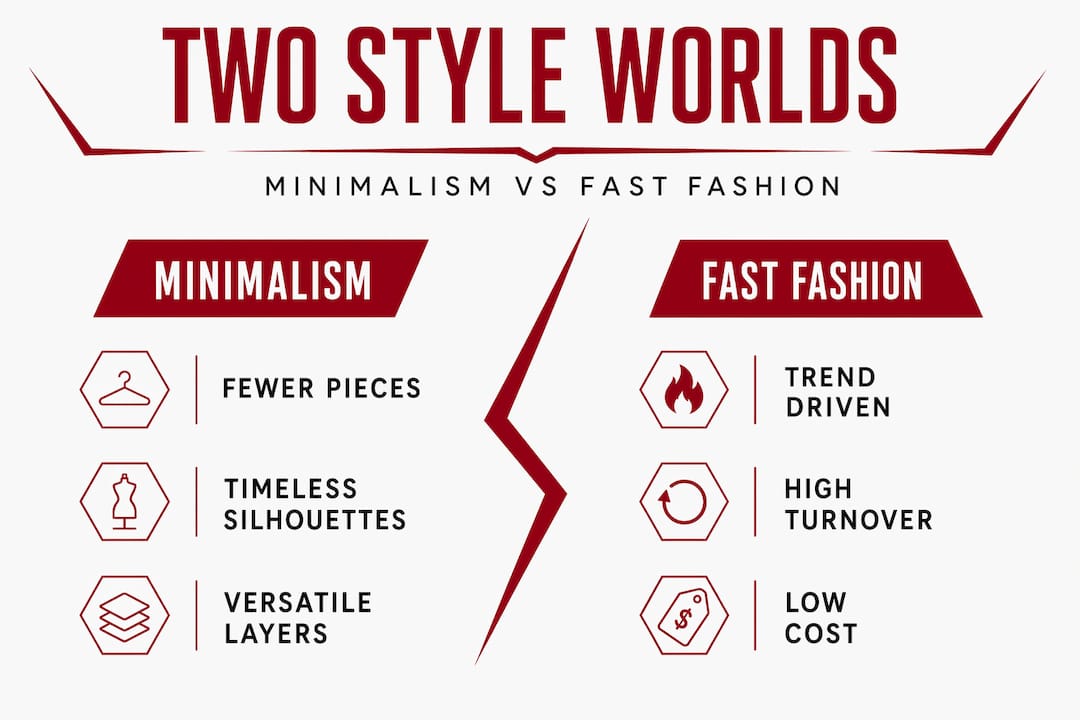
Minimalist streetwear sits at the intersection of all three forces. It borrows quiet luxury’s emphasis on quality and detail, rejects fast fashion’s disposability, and adds streetwear’s cultural authenticity and self-expression. The result is a wardrobe that communicates who you are without needing a logo to do the talking.
Key advantages of this approach:
- Timeless silhouettes outlast trend cycles by years
- Cohesive aesthetics make every outfit feel intentional
- Investment pieces like quiet luxury hoodies carry both style and durability
- Reduced buyer’s remorse because every purchase is deliberate
How to embrace minimalism in your streetwear wardrobe
Building a minimalist wardrobe isn’t about throwing everything out and starting over. It’s a process, and it works best when you approach it methodically rather than impulsively.
- Audit what you own. Pull everything out. If you haven’t worn it in six months and can’t name a specific upcoming occasion for it, it goes. Be honest.
- Identify your real rotation. Most people wear 20% of their wardrobe 80% of the time. Those are your keepers and your style signals.
- Define your palette. Pick two to three base colors and one or two accent tones. Everything you own should work within that range so mixing is automatic.
- Build your capsule in layers. Aim for 30 to 35 pieces: base layers, mid layers, outerwear, and a few statement items that anchor the whole system.
- Apply the 30-wear test to every new purchase. If you can’t picture wearing it 30 times in the next year, it doesn’t belong in a minimalist wardrobe.
- Use accessories to add individuality. A consistent wardrobe doesn’t mean a static one. Hats, bags, and layering details keep things fresh without adding closet chaos.
Minimalist wardrobes thrive on cohesion and mixing, not on magazine-perfect capsule lists that look good on paper but don’t survive real mornings. Build for your actual life, not an idealized version of it.
Pro Tip: Start your capsule with one versatile statement piece and build outward. A stylish oversized tee or a pair of versatile streetwear leggings can anchor five to eight distinct outfits on their own when your palette is right.
Why minimalism in fashion is a creative freedom, not a limitation
Here’s the take most minimalism articles won’t give you: minimalism isn’t about restraint. It’s about signal clarity. When you strip away the noise of a bloated wardrobe, what’s left is actually you. Your real preferences. Your actual aesthetic. The version of yourself you’d dress as if you had to wear the same 30 pieces for a year and still feel proud of every outfit.
The fashion industry profits from insecurity. New trends exist to make last season feel insufficient. Minimalism is a direct rejection of that loop, not because it’s anti-fashion, but because it’s more fashion. It demands you know what you like, why you like it, and how to wear it with confidence. That’s a higher bar than buying whatever’s trending.
The repetition that minimalism builds isn’t monotony. It’s mastery. When you wear the same silhouettes consistently, you get better at styling them. You notice what works, what doesn’t, and how small details shift the whole read of an outfit. That’s creative development, not creative limitation.
Minimalist streetwear, specifically, is one of the most powerful forms of identity expression available right now. It communicates cultural fluency, aesthetic confidence, and a refusal to be defined by a logo or a trend cycle. Exploring minimalist fashion perspectives through a brand that understands both streetwear culture and quality construction is the fastest way to see what that looks like in practice.
Discover minimalist streetwear essentials at Blaq Aesthetics
If you’re ready to build a wardrobe that actually works for you, Blaq Aesthetics makes that easy. Every piece is designed with versatility and quality at the center, so you’re not buying filler. You’re buying foundation.
Start with the BLAQ stitched zip hoodie, a clean, elevated layering piece that anchors any capsule wardrobe. Pair it with the BLAQ distressed oversized t-shirt for a statement base that still mixes effortlessly with the rest of your rotation. Add the Aesthetics long sleeve t-shirt for a versatile layer that transitions from streetwear to elevated casual without skipping a beat. These three pieces alone can build the core of a 30-item capsule wardrobe that feels intentional, cohesive, and authentically yours.
Frequently asked questions
What is a capsule wardrobe and how does it relate to minimalism?
A capsule wardrobe is a small, curated collection of versatile clothing pieces designed to mix and match, embodying minimalism by reducing quantity while enhancing style and utility. Capsule wardrobes simplify closets to increase wearability and reduce decision fatigue.
How does minimalism in fashion save me money?
Minimalism saves money by focusing on fewer, higher-quality pieces that last longer and carry a lower cost-per-wear compared to frequent fast fashion purchases. Minimalist wardrobes save $7,550 over five years by reducing replacement costs and increasing durability.
Does wearing the same style repeatedly affect my creativity or self-expression?
Wearing a consistent style reduces decision fatigue and increases confidence, freeing mental energy to express creativity through subtle details like accessories and layering. Uniform dressing helps maintain self-image and boosts both creativity and confidence.
How can I start transitioning to a minimalist wardrobe?
Begin by auditing your current clothes, keep what you wear regularly, identify gaps, and slowly add versatile, high-quality pieces following the 30-wear test for practicality. The best way to build a capsule wardrobe starts with an honest audit and filling gaps with quality staples.
Is minimalism in fashion sustainable?
Yes, minimalism promotes sustainability by reducing overconsumption, decreasing textile waste, and encouraging longer-lasting quality garments. Purchasing fewer, higher-quality items directly reduces the fashion footprint and keeps garments out of landfills.
