
You know that moment when you step outside and immediately regret your outfit? Too many layers and you’re sweating by noon. Too few and you’re freezing by 3 PM. That cycle of wardrobe confusion hits hardest during seasonal shifts, and it’s exactly why transitional dressing has become one of the most valuable skills in modern streetwear. This article breaks down what transitional dressing actually means, how layering works in practice, and how to build a wardrobe that keeps you looking sharp no matter what the weather decides to do.
Table of Contents
- Understanding transitional dressing style
- How layering makes or breaks your look
- Building your transitional essentials wardrobe
- The benefits of transitional dressing in streetwear
- Why most people misunderstand transitional dressing
- Shop transitional streetwear essentials
- Frequently asked questions
Key Takeaways
| Point | Details |
|---|---|
| Transitional dressing defined | Transitional dressing equips you to look and feel great in unpredictable weather by using a smartly layered, versatile wardrobe. |
| Layering is crucial | Strategic layering (base, mid, and outer) delivers comfort, temperature control, and keeps your style fresh across seasons. |
| Wardrobe versatility | Focusing on essentials means you can confidently remix outfits and avoid overbuying or wasting pieces as seasons change. |
| Avoid common mistakes | Always choose breathable fabrics and avoid single heavy layers to maximize comfort and adaptability. |
Understanding transitional dressing style
Transitional dressing is not about buying a whole new wardrobe every time the seasons change. According to Transitional dressing, “transitional dressing is an approach to dressing for ‘in-between’ seasons using pieces and outfits designed to work across the shift rather than buying a full new wardrobe.” That definition cuts straight to the point. It’s about flexibility, not volume.
The core idea is simple: choose pieces that work across a range of temperatures and conditions. Instead of pulling out a completely different closet in October, you’re mixing and matching what you already own to handle whatever the day throws at you. That might mean throwing a hoodie under a lightweight jacket in the morning, then ditching the jacket by afternoon when the sun comes out.
“The goal of transitional dressing isn’t to look like you planned for every scenario. It’s to build a wardrobe so smart that you naturally are prepared for every scenario.”
In streetwear specifically, this approach fits perfectly. The culture has always prioritized practical layering and standout basics that can be worn in multiple ways. A clean graphic tee, an oversized hoodie, and a pair of versatile sneakers are already the foundation of a transitional wardrobe. You’re not starting from scratch. You’re refining what you already love. Explore wardrobe versatility insights to see how these principles apply to real, wearable pieces.
Key characteristics of transitional dressing in streetwear include:
- Versatile silhouettes that work across seasons without looking out of place
- Neutral and adaptable colorways that mix easily with statement pieces
- Repeatable basics that anchor multiple different outfits
- Layerable constructions like zip-ups, open-front jackets, and lightweight hoodies
Now that the basics are clear, let’s break down the mechanics of how transitional dressing actually works in practice.
How layering makes or breaks your look
Layering sounds simple until you’re standing in your room looking like you grabbed clothes from three different seasons. The secret is thinking in systems, not individual pieces. Modular layering works through a “base + midlayer + outer layer” structure where each piece can be removed or added without ruining the overall look.
Here’s how that breaks down in a real streetwear context:
- Base layer: A breathable, fitted graphic tee or long sleeve shirt. This is what sits closest to your skin, so it needs to manage moisture and keep you comfortable.
- Midlayer: A hoodie, fleece pullover, or lightweight sweatshirt. This is your insulation layer. It traps heat when you need it and comes off easily when you don’t.
- Outer layer: A windbreaker, lightweight jacket, or overshirt. This is your shield against wind and light rain. It completes the look and gives you that extra protection during unpredictable weather.
The biggest mistake most people make is skipping the midlayer entirely and going straight to a heavy coat. That approach locks you into one temperature range. Real layering is heat management, using “thin, breathable layers near skin; heavier/insulating layers on the outside” instead of one big heavy layer that you can’t adapt.
| Layer | Purpose | Streetwear example |
|---|---|---|
| Base | Moisture control, comfort | Graphic tee, long sleeve tee |
| Midlayer | Insulation, style anchor | Hoodie, fleece pullover |
| Outer | Wind/rain protection | Windbreaker, lightweight jacket |
Common layering pitfalls to avoid:
- Mixing fabrics that don’t breathe together (think polyester on polyester)
- Choosing bulky midlayers that make the outer layer look awkward
- Ignoring fit, since oversized on oversized on oversized loses structure fast
- Forgetting that color coordination matters just as much as function
Pro Tip: When building your layering system, start from the inside out. If your base layer is comfortable and breathable, everything else falls into place. A versatile fleece layering piece is the midlayer upgrade that makes the whole system work.
The right layering system means you can dress for a 45-degree morning and a 68-degree afternoon without carrying a bag full of backup clothes. That’s not just practical. That’s smart style.
With layering decoded, let’s talk about choosing the right building blocks—your essential pieces—for maximum versatility.
Building your transitional essentials wardrobe
Building a transitional wardrobe is not about buying more. It’s about buying better. The approach that actually works is what style editors call “wardrobe editing.” Transitional outfit guides treat it as “choosing a few items that replace winter-only pieces and managing layering as temperatures swing.” You’re not overhauling. You’re refining.
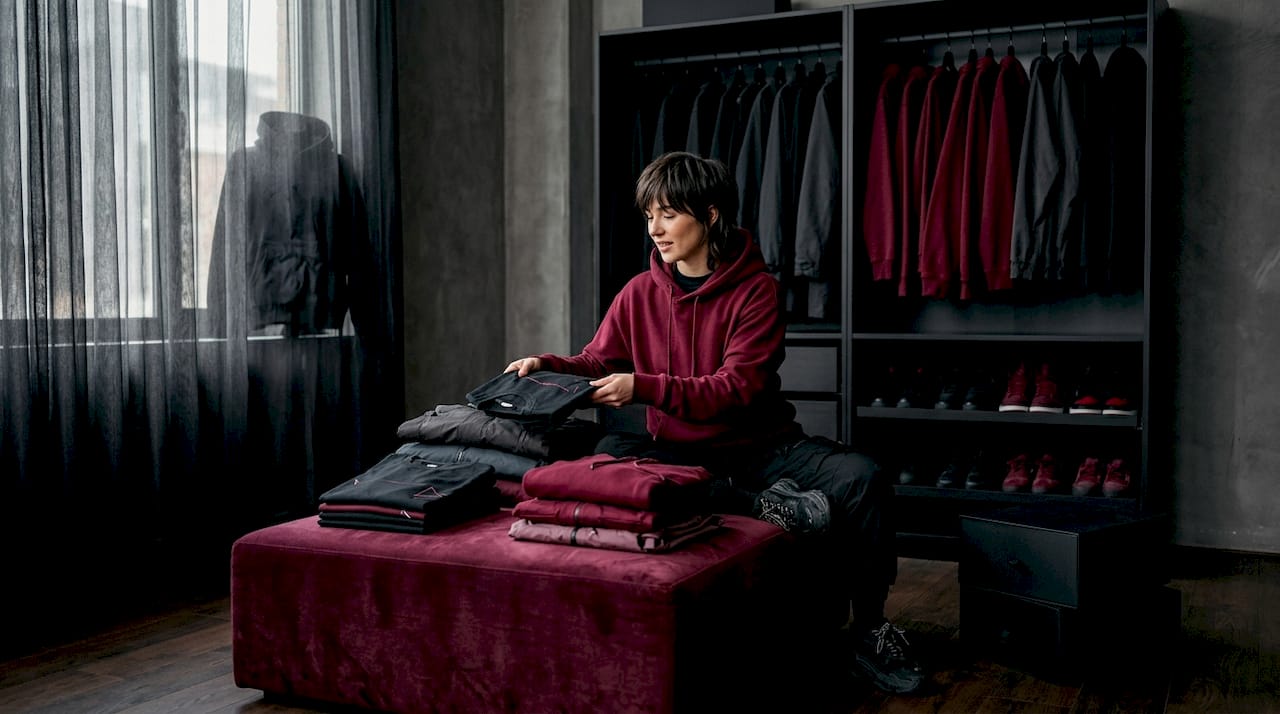
The benchmark mindset from Vogue puts it clearly: “build a repeatable set of essentials that can stand alone or be layered with ease for consistency and versatility.” That’s the exact framework BLAQ Aesthetics is built around. Pieces that work hard, look good alone, and layer even better.
Here’s how to approach building your transitional essentials:
Outerwear: Pick one or two lightweight jackets that work from early fall through spring. Think windbreakers, coaches jackets, or denim jackets. Avoid anything too season-specific like a heavy parka or a summer-only linen blazer.
Tops and sweatshirts: Graphic tees and long sleeve tees are your foundation. Add one or two quality hoodies or fleece pullovers that can serve as midlayers or standalone pieces. These are your most-worn items, so quality matters more here than anywhere else.
Footwear: Choose shoes that handle light rain and look good with multiple outfit formulas. Low-profile sneakers in neutral colors are the most versatile option. Chunky soles add visual weight that balances oversized fits well.
Accessories: This is where transitional dressing gets interesting. A beanie works from late summer through winter. A crossbody bag adds function and style without adding bulk. A headband or bucket hat can shift the whole energy of an outfit while keeping you comfortable.
| Wardrobe category | Key transitional pieces | Avoid |
|---|---|---|
| Outerwear | Windbreaker, lightweight jacket | Heavy parkas, season-specific coats |
| Tops | Graphic tees, long sleeves, hoodies | Very thin tanks, thick knit sweaters |
| Footwear | Low-profile sneakers, boots | Sandals, heavy winter boots |
| Accessories | Beanies, crossbody bags, headbands | Overly seasonal statement accessories |
Pro Tip: The “edit, don’t overhaul” rule saves money and closet space. Before buying anything new each season, pull out what you already own and identify what layers well with what. You’ll usually find you need far less than you think. Check out season-spanning wardrobe staples that are designed to do exactly that.
The goal is a wardrobe where almost everything works with almost everything else. When you reach that point, getting dressed stops being stressful and starts being creative.
Wardrobe sorted, now discover how transitional dressing unlocks comfort, sustainability, and creative self-expression all year long.
The benefits of transitional dressing in streetwear
Transitional dressing isn’t just a styling strategy. It’s a smarter way to engage with fashion altogether. The benefits stack up fast once you start applying the principles consistently.
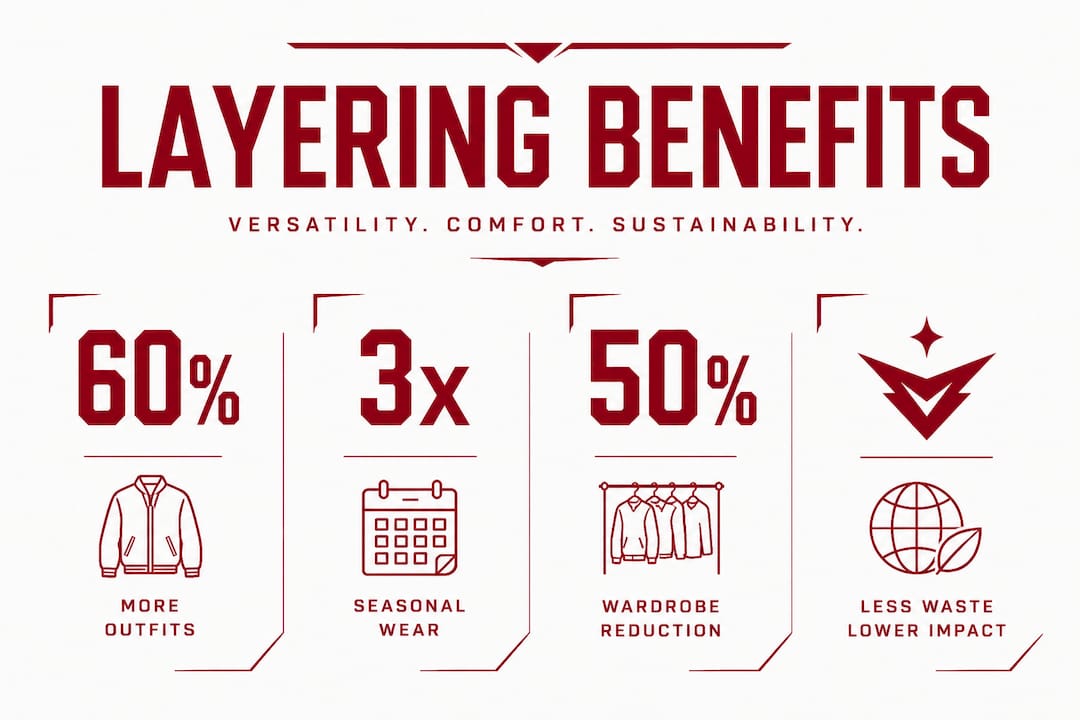
Transitional dressing allows you to “update your look for new weather without wasting or overbuying.” That’s a direct financial benefit. When you stop buying season-specific pieces that only work for three months, your cost-per-wear on every item drops significantly. A quality hoodie that you wear from September through April is a far better investment than a trendy jacket you pull out twice.
Here’s why transitional dressing works so well in streetwear:
- Comfort stays consistent. You’re never caught off guard by a temperature swing because your outfit is designed to adapt.
- Your style stays sharp. Layering adds visual depth and dimension that a single-piece outfit rarely achieves.
- You reduce fashion waste. Curating instead of replacing means fewer impulse purchases and less clothing ending up in landfills.
- Repeatability builds your signature look. When you know your formula, you can execute it confidently every single day.
- Versatile pieces get more wear. A graphic tee worn under a hoodie in October is the same tee worn solo in April. That’s year-round value.
The sustainability angle is worth emphasizing. The fashion industry generates enormous amounts of waste, and a lot of it comes from seasonal buying cycles where people feel pressure to update their entire look every few months. Transitional dressing breaks that cycle. You’re not following a trend calendar. You’re building a personal uniform that evolves slowly and intentionally.
For a style-conscious person who cares about both how they look and the impact of their choices, transitional dressing is one of the most practical frameworks available. It rewards thoughtfulness over impulse, and it makes your wardrobe feel intentional rather than chaotic.
Now that you know the unique advantages, let’s surface the real insights—what most people get wrong about transitional dressing and how to actually stand out.
Why most people misunderstand transitional dressing
Here’s the honest take: most transitional dressing guides are too rigid. They give you a formula and tell you to follow it exactly, which completely misses the point. Transitional dressing is a set of principles, not a uniform.
The most common mistake we see is people overcomplicating the process. They read about layering, then go out and buy five new pieces specifically labeled “transitional,” and end up with a closet full of items that don’t actually work together. The irony is that chasing the concept defeats the purpose of it.
The second most common mistake is ignoring fabric. Layering fails “if fabrics don’t breathe or you rely on a single heavy layer; this can cause overheating and then chilling, ruining comfort and adaptability.” That’s not a minor inconvenience. It completely undermines the whole point of dressing for in-between weather. If you’re sweating through your base layer by 10 AM, no amount of stylish outerwear fixes that.
The real flex in transitional dressing is repeatability. Not copying someone else’s exact outfit, but building your own modular system that you can execute confidently without thinking too hard. That’s what separates people who look effortlessly put-together from people who look like they’re trying too hard.
Personal style is the variable that rigid guides always ignore. Your transitional wardrobe should reflect who you are, not what a seasonal lookbook tells you to wear. If your signature is bold graphics and oversized silhouettes, your transitional system should be built around that. If you lean more minimal, your layering formula will look completely different. Both are valid. Both can work perfectly.
The principle is simple: learn the system, then make it yours. Flexibility, comfort, and self-expression are the actual goals. Everything else is just a suggestion.
Shop transitional streetwear essentials
Building a transitional wardrobe gets a lot easier when the pieces are already designed with versatility in mind. At BLAQ Aesthetics, every drop is built around the idea that your clothes should work as hard as you do, across seasons and situations.

Start with the layering anchors: zip hoodies for layering give you that perfect midlayer option that adds structure and warmth without locking you into one temperature range. Pair them with long sleeve tees as your base and you’ve already got the core of a solid transitional system. From statement graphics to clean basics, the full streetwear collection is curated around pieces that layer well, wear often, and hold their look season after season. This is where your transitional wardrobe actually starts.
Frequently asked questions
What exactly is transitional dressing?
Transitional dressing means wearing flexible layers and essentials so you’re prepared for unpredictable, changing weather. As defined clearly, it is an approach to dressing for in-between seasons using pieces designed to work across the shift rather than buying a full new wardrobe.
How do you layer clothes for transitional dressing?
Use a base layer, midlayer, and outer layer, and choose breathable fabrics so you can easily add or remove items as temperatures change. Modular layering with pieces that can be removed or added without ruining the look is the core mechanic behind effective transitional dressing.
Why is transitional dressing important for streetwear?
It keeps your look on point and comfortable as seasons shift, and lets you get more use out of key streetwear essentials. The repeatable essentials mindset means building pieces that stand alone or layer with ease for year-round consistency.
What’s a common mistake in transitional dressing?
Relying only on a single heavy layer or using non-breathable fabrics can ruin flexibility and comfort. Layering fails when fabrics don’t breathe, causing overheating and then chilling that destroys the adaptability you were going for in the first place.
