
Smart casual dress codes feel like a trap. The invite says “smart casual,” and suddenly you’re standing in front of your closet questioning every single piece you own. Too dressed up? Too relaxed? It’s one of the most misread dress codes out there, and it trips up even the most fashion-aware people. At BLAQ Aesthetics, we’ve seen it time and again: great style gets lost in overthinking. This guide gives you a clear, repeatable formula to nail smart casual every time, blending the streetwear energy you love with the polished edge that actually turns heads.
Table of Contents
- What does smart casual really mean?
- The effortless smart casual formula: Anchor + ease
- Blazers and streetwear: The game-changing top layer
- Effortless polish: Color, fit, and common mistakes
- Personalize your smart casual: Building signature looks
- The uncomfortable truth: Why most “effortless” smart casual fails
- Explore smart casual essentials at Blaq Aesthetics
- Frequently asked questions
Key Takeaways
| Point | Details |
|---|---|
| Smart casual is balanced | Mix refined pieces with relaxed staples for an easy, stylish look. |
| Start with an anchor | Pick one polished item such as a blazer or dress, then add casual layers. |
| Prioritize fit and color | Relaxed fits and monochrome outfits make style appear effortless. |
| Avoid common pitfalls | Skip athletic gear, heavy branding, and distressed clothing for true smart casual. |
What does smart casual really mean?
Let’s clear the air first. Smart casual is not a contradiction. It’s a sweet spot, and once you understand where it sits on the style spectrum, everything clicks into place.
Smart casual is a balance between polished and relaxed, typically more refined than casual weekend wear but softer and more flexible than classic business wear. Think of it as the middle lane on a three-lane highway. Business formal is the far left, pure streetwear is the far right, and smart casual is the lane where you’re moving with intention, looking put together without looking stiff.
Here’s a quick reference to understand where smart casual lives:
| Style category | Formality level | Key pieces | Vibe |
|---|---|---|---|
| Business formal | High | Suits, ties, dress shoes | Corporate, structured |
| Business casual | Medium-high | Blazers, chinos, loafers | Professional but approachable |
| Smart casual | Medium | Tailored basics, clean sneakers, elevated separates | Polished but relaxed |
| Streetwear | Low-medium | Graphic tees, hoodies, sneakers | Bold, expressive |
| Pure casual | Low | Sweats, flip-flops, worn-in tees | Off-duty, comfort-first |
A few common misconceptions trip people up constantly. Some think smart casual means throwing on a blazer over a T-shirt and calling it done. Others assume it means dressing down a suit. Neither is quite right. Smart casual is its own category, not a watered-down version of something else.
Streetwear can absolutely play a role here. A well-fitted slit maxi dress with structured accessories, for example, reads smart casual with a cultural edge. The key is that every piece earns its place. Nothing looks like an afterthought.
Common smart casual misconceptions to avoid:
- Thinking any blazer automatically makes an outfit smart casual
- Assuming ripped jeans are always off-limits (fit and context matter more)
- Believing smart casual means boring or neutral-only looks
- Confusing “relaxed” with “sloppy”
The effortless smart casual formula: Anchor + ease
With a clear definition in mind, it’s time to see how you can build a smart casual outfit without second-guessing every choice.
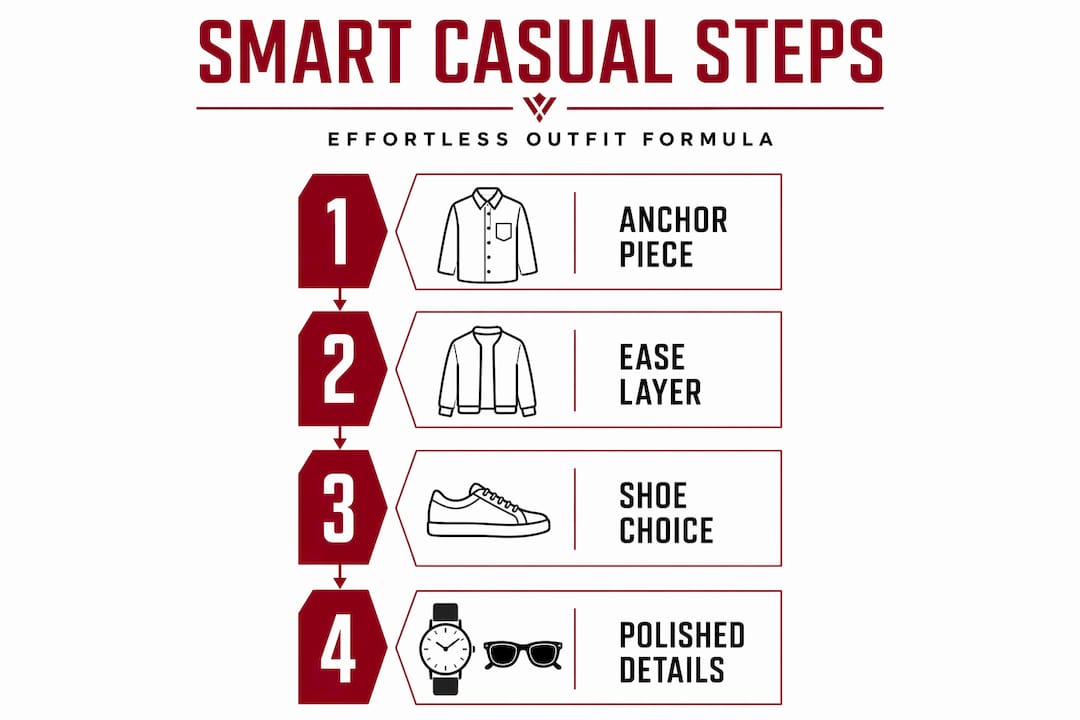
A reliable smart-casual method for young adults is to start with one refined “anchor” piece and pair it with one casual piece, a consistent high-low mix. That’s it. One elevated piece. One casual piece. Repeat.
Here’s how to execute it step by step:
- Choose your anchor piece. This is the elevated item that signals “smart.” Think a structured polo, tailored trousers, a sleek midi dress, or a crisp button-down. Your anchor sets the tone.
- Add your ease piece. This is where your personality and streetwear sensibility come in. A relaxed trouser, a softly draped top, or clean-cut sweatpants bring the comfort without undoing the polish.
- Finish with intentional shoes. Shoes can make or break the formula. Clean leather sneakers, loafers, or low-profile boots keep you in the smart casual zone.
- Edit, don’t add. Resist the urge to pile on accessories or layers. Smart casual thrives on restraint.
Here’s a quick-reference table to make morning decisions faster:
| Anchor piece | Ease pairing | Shoe choice | Resulting vibe |
|---|---|---|---|
| Half-zip polo | Tailored trousers | White leather sneakers | Classic, clean |
| Structured blazer | Curved sweatpants | Loafers | Elevated streetwear |
| Crisp button-down | Dark slim jeans | Chelsea boots | Timeless, versatile |
| Midi dress | Denim jacket | Block-heel sandals | Feminine, relaxed |
Pro Tip: When in doubt, go tonal. Wearing one color family from head to toe, like all-black, all-cream, or all-earth tones, creates instant polish without requiring any styling effort. Monochromatic dressing is the secret weapon of people who always look put together.
Blazers and streetwear: The game-changing top layer
Now, let’s talk about the one piece that can instantly upgrade your look from basic to fashion-insider: the blazer.
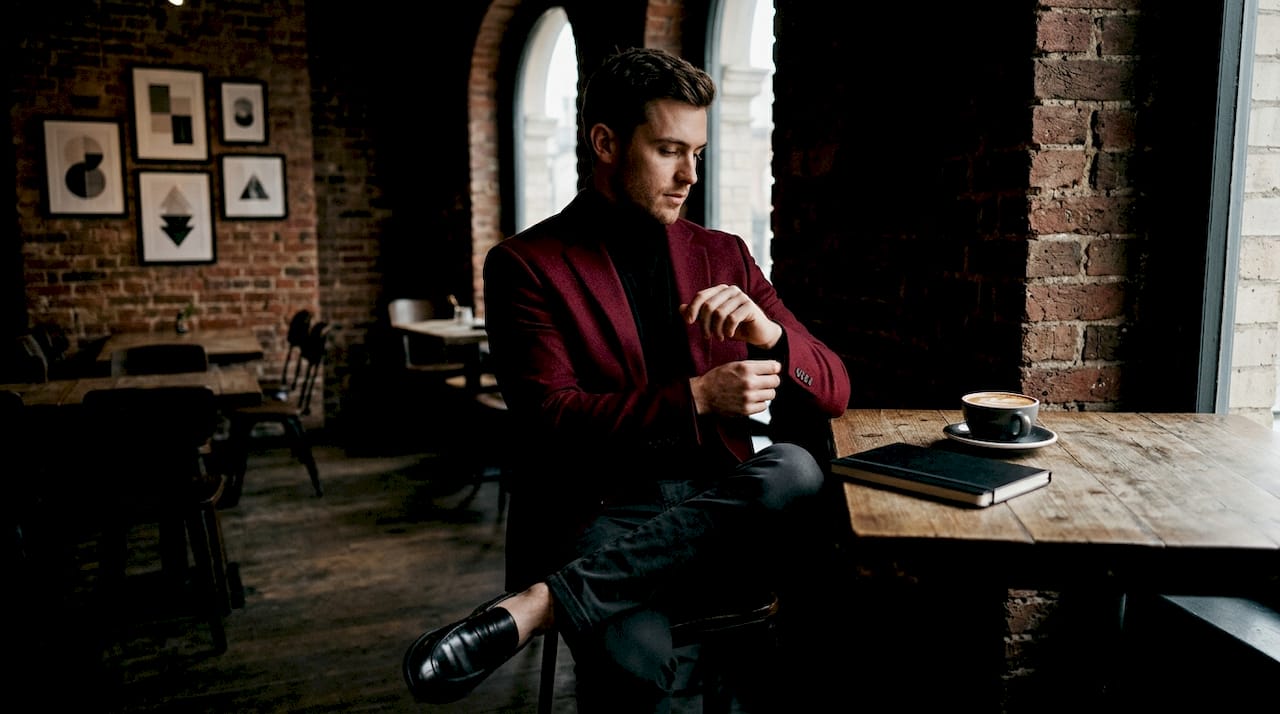
The blazer is a high-leverage item: it can instantly elevate a smart-casual look and help you “dress down” tailoring without looking sloppy, as long as the blazer is the right kind of cut and the rest of the outfit stays relaxed. That last part is critical. A stiff, structured suit blazer worn over a graphic tee doesn’t create smart casual. It creates confusion. The blazer you want for this formula is relaxed in cut, slightly oversized or unstructured, and in a fabric that doesn’t scream boardroom.
Here’s what to look for when selecting a blazer for smart casual:
- Relaxed or unstructured shoulders. Avoid heavily padded blazers. You want drape, not armor.
- Slightly oversized fit. Not boxy, just easy. The blazer should move with you.
- Versatile fabric. Linen, cotton blends, and light wool work across seasons. Heavy wool reads too formal.
- Neutral or muted tones. Black, camel, olive, and gray give you the most outfit combinations.
- No matching trousers. The moment you match the blazer to the pants, you’ve crossed into business territory.
Pairing a blazer with a short sleeve maxi dress is one of the most underrated smart casual combinations out there. The length and ease of the dress bring the relaxed energy, while the blazer adds structure and intention. It’s a look that works for dinner, gallery openings, or a creative office environment.
Pro Tip: If a blazer feels too formal for the occasion, swap it for a track jacket in a clean colorway. A well-chosen track jacket with tailored trousers hits the same high-low balance with more streetwear personality.
Effortless polish: Color, fit, and common mistakes
All these outfit moves rely on a few simple strategies that make the difference between effortless and “trying too hard,” or not enough.
Effortlessness in smart casual often comes from tonal and monochromatic styling and “clean line” choices, meaning fewer visual disruptions and cleaner silhouettes. This is the styling principle that separates people who always look put together from those who look like they tried but missed. Clean lines mean your clothes fit well, your hem isn’t fraying, and your silhouette reads intentional rather than accidental.
Fit is the single biggest factor in whether smart casual works. You can wear the most expensive pieces in the world, but if they don’t fit your body well, the look collapses. Clothes that are too baggy without intention read sloppy. Clothes that are too tight read uncomfortable. Smart casual lives in the zone of relaxed ease with visible structure.
Color strategy matters just as much. Here’s how to think about it simply:
- Monochromatic: One color, multiple shades. All-black with varying textures. All-white with different fabrics. Instantly elevated.
- Tonal: Colors that sit next to each other on the color wheel. Camel and cream. Olive and forest green. Warm and cohesive.
- Neutral base with one accent: Black trousers, white shirt, one statement shoe or bag. Clean and intentional.
Avoid wearing items that read as clearly athletic or overly casual, including hoodies, graphic tees, distressed denim, flip-flops, and running shoes, because the “smart” portion collapses when the outfit skews too gym or weekend.
Common smart casual mistakes to avoid:
- Wearing athletic sneakers with tailored pieces (unless it’s a very intentional, fashion-forward choice)
- Over-branding: too many visible logos compete with the clean aesthetic
- Wearing heavily distressed shorts or bottoms in formal-leaning environments
- Ignoring shoe condition: scuffed or dirty shoes undercut even the best outfit
- Mixing too many competing patterns without a clear color anchor
- Wearing wrinkled or visibly worn-in pieces that read as “didn’t try”
“Smart casual is not about dressing down your best suit or dressing up your worst hoodie. It’s about choosing pieces that naturally occupy the middle ground, where comfort and intention coexist.” — Supabold Style Editors
Personalize your smart casual: Building signature looks
Once you’ve mastered the essentials, try these customizations to put your own stamp on smart casual without killing the effortless vibe.
The formula gives you a foundation. Your personality gives it life. On-trend, effortless smart-casual silhouettes for spring involve looser and baggy trousers paired with a blazer, favoring relaxed shapes rather than rigid or overly fitted pieces. That’s the direction the culture is moving, and it aligns perfectly with the streetwear-meets-polished energy that BLAQ Aesthetics is built on.
Here’s how to build your own signature smart casual recipe:
- Identify your anchor category. Are you a top-as-anchor person (structured polo, blazer, button-down) or a bottom-as-anchor person (tailored trousers, structured skirt, fitted midi)? Know your default.
- Pick a consistent color story. Choose two or three colors that you always feel good in and build your smart casual wardrobe around them. This makes getting dressed faster and more cohesive.
- Choose a signature shoe. One pair of clean, versatile shoes that you reach for automatically. Loafers, white leather sneakers, or minimal boots all work. Make it yours.
- Add one personality piece per outfit. This is where your culture and style voice come through. A statement earring, an interesting bag, a textured layer, or a quarter-zip top in an unexpected color can be the detail that makes the look memorable.
- Refine over time. Your signature look will evolve. Try combinations, take note of what gets compliments, and double down on what feels most like you.
Ways to add personality without losing the smart casual balance:
- Hats: A structured cap or bucket hat in a neutral tone adds streetwear edge without disrupting the polish
- Jewelry: Layered chains, bold rings, or sculptural earrings add dimension to simple outfits
- Sneaker choice: A clean, minimal sneaker in an unexpected colorway can be the focal point of an otherwise understated look
- Texture play: Mixing fabrics like satin, ribbed cotton, and light denim adds visual interest without pattern clashing
- Bag selection: A structured mini bag or tote in a contrasting color ties the high-low mix together
The uncomfortable truth: Why most “effortless” smart casual fails
All these details bring us to a final, unfiltered truth about smart casual, one most style guides won’t tell you.
Most people fail at smart casual not because they don’t know the rules, but because they follow too many of them at once. They read a guide, absorb a list of dos and don’ts, and then try to check every box in a single outfit. The result is something that looks labored. Stiff. Like a costume rather than a personal style.
Some guides overcorrect toward strict rules. Instead, treat smart casual as an outcome, a neat, structured, clean presentation, rather than a fixed recipe. That reframe changes everything. When you stop asking “does this follow the rules?” and start asking “does this look clean, intentional, and like me?”, your outfits improve immediately.
Here’s what we’ve noticed at BLAQ Aesthetics: the people who consistently nail smart casual aren’t the ones with the most expensive wardrobes or the most fashion knowledge. They’re the ones who know themselves. They have a clear point of view, a consistent color story, and a handful of pieces they trust completely. They don’t overthink it because they’ve already done the thinking.
The streetwear influence in smart casual is real and it’s valid. But the mistake is letting streetwear’s maximalism override the “smart” part of the equation. Bold pieces can absolutely be part of a smart casual look. The key is that one bold piece needs to be surrounded by clean, simple counterparts that let it breathe. One statement, not five.
Smart casual is ultimately about presenting yourself with intention. That’s it. The clothes are just the tools.
Explore smart casual essentials at Blaq Aesthetics
Ready to upgrade your lineup with polished pieces that still feel fresh? Here’s where to find your next signature item.
At BLAQ Aesthetics, every piece is designed with the anchor-and-ease formula in mind. Whether you’re reaching for a slit maxi dress as your elevated anchor or building a tonal outfit around our structured basics, the catalog makes the high-low mix simple. We’ve built the brand specifically for young adults who want to look intentional without sacrificing their cultural identity or personal style. Browse the full collection at blaqaesthetics.com and find the pieces that become your go-to smart casual foundation. Your signature look is already in there. You just have to build it.
Frequently asked questions
What are the best shoes for smart casual outfits?
Loafers, clean sneakers, and low-profile boots are perfect for smart casual because they bridge the gap between dressy and relaxed. The goal is to balance refined items like blazers with footwear that doesn’t push the look into full formal territory.
How can I make sure my outfit looks effortless and not forced?
Stick to relaxed fits, clean lines, and tonal or monochrome color schemes for breezy, polished style. Tonal and monochromatic styling creates the visual cohesion that makes an outfit look like it came together naturally.
Is distressed denim or activewear ever okay for smart casual?
Avoid obviously distressed denim and athletic pieces, as they push the look too far from “smart” and into casual-only territory. Athletic or overly casual items collapse the “smart” portion of the equation and read as off-duty rather than intentional.
What’s a quick formula if I’m running late?
Choose one elevated piece, one casual piece, add clean shoes and a simple color palette to create a polished smart casual outfit in minutes. This fast morning method removes decision fatigue and keeps your look consistent even on rushed days.
