
You already know how clothing affects first impressions. Or you think you do. Most people assume horizontal stripes make you look wider, that black always reads as powerful, and that rocking the biggest logo in the room signals status. None of that is fully true, and believing it might be quietly working against you. In 7 seconds or less, the people you meet are already making calls about your confidence, your competence, and whether they trust you, all based on what you’re wearing. Here’s what’s actually happening in their heads, and how to use it.
Table of Contents
- How the brain uses clothing to form snap judgments
- Common clothing signals: fit, color, and style explained
- Patterns and misconceptions: the case of horizontal stripes
- Streetwear and self-expression: crafting authentic first impressions
- Wearing confidence: how fit and clothing choice boost self-perception and social interaction
- Why trying too hard can backfire: authentic self-expression matters more
- Explore Blaq Aesthetics for streetwear that makes your first impression
- Frequently asked questions
Key Takeaways
| Point | Details |
|---|---|
| First impressions form instantly | People judge you within seconds based on your clothing choices before you even speak. |
| Fit over brand | Well-fitted clothes send stronger positive signals than expensive brands or flashy logos. |
| Color sends mixed signals | Colors like black convey confidence but can also trigger negative emotions in observers. |
| Patterns can mislead perception | Horizontal stripes often make wearers look thinner despite common beliefs. |
| Authenticity builds trust | Balancing self-expression with social awareness creates authentic and effective first impressions. |
How the brain uses clothing to form snap judgments
When you walk into a room, nobody consciously thinks, “Let me assess this person’s outfit.” It happens automatically. The brain uses visual shortcuts, called heuristics, to classify unfamiliar people fast. Clothing is one of the clearest signals it has to work with. Before you say a word, your fit, your color palette, and how clean your shoes are have already been processed and filed.
Psychology studies consistently show people form first impressions based on clothing in 7 seconds or less, with well-fitted clothes signaling discipline and confidence while ill-fitted ones suggest low effort. That’s not a lot of time. It’s faster than most people take to read a text message.
There’s a concept called enclothed cognition, which describes how wearing specific clothes doesn’t just change how others see you. It changes how you think and behave. Studies on people wearing lab coats found that subjects wearing them performed better on attention-based tasks than those who didn’t. The coat carried an association with precision, and the wearer absorbed it. The same logic applies to your fits.
Here’s what your brain (and everyone else’s) is reading in those first seconds:
- Fit signals whether you pay attention to detail and respect the occasion.
- Condition (clean, pressed, worn, or torn) communicates effort and self-regard.
- Color triggers emotional associations before the brain processes anything consciously.
- Coordination shows intentionality, suggesting you made deliberate choices rather than grabbing whatever was clean.
“Your outfit is a first draft of your personality. People edit it fast, and most of the time, they never revisit it.”
Grooming amplifies everything. A perfectly coordinated fit can be undermined by dirty nails or unkempt hair because the brain registers inconsistency as a reason to distrust its first read. Explore Blaq Aesthetics for pieces built around the kind of clean intentionality that reads well from the jump.
Common clothing signals: fit, color, and style explained
Fit is the single highest-leverage variable in how outfits influence opinions. You can wear a plain white tee and dark pants and be the most put-together person in the space, as long as it fits. Conversely, a designer logo tee worn two sizes too large reads as careless, regardless of the price tag. Tailors consistently find that 90% of people wear wrong sizes, but proper tailoring signals discipline and avoids the “trying too hard” look.
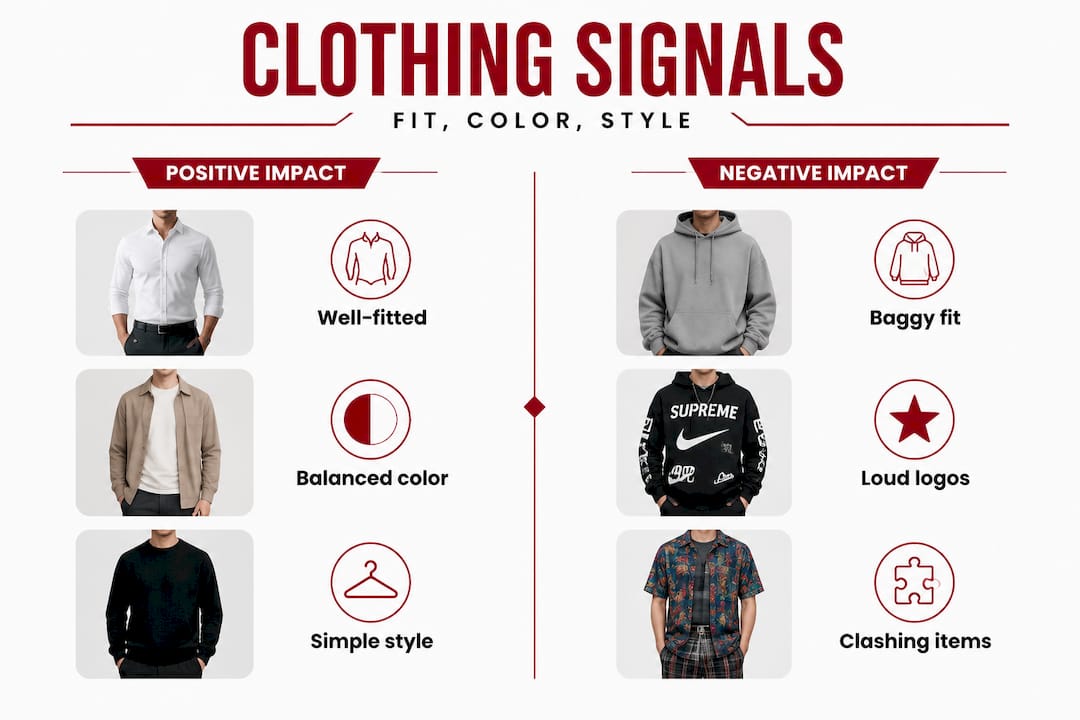
Color is more loaded than most people realize. Black is the obvious confidence play in streetwear, but a 2026 survey found black clothing is linked to confidence and reliability while also being associated with negative emotions like sadness in 78.6% of cases. Context and pairing matter enormously.
Here’s a quick breakdown of color signals:
- Black: Confidence, authority, possible emotional distance
- White: Cleanliness, openness, approachability
- Navy and earth tones: Reliability, groundedness, social awareness
- Bright primaries: Energy, boldness, can read as trying too hard if overdone
- Muted neutrals: Subtlety, aesthetic maturity, intentional cool
Logos and accessories are where a lot of people overcorrect. More is not more. Stacking logos or layering accessories without purpose pulls focus and, more importantly, signals insecurity rather than confidence.
Pro Tip: The one-item rule works. Pick one statement piece per outfit. Let everything else support it without competing. A bold graphic tee hits harder when the pants and shoes are clean and simple.
| Element | What it signals (positive) | What it signals (negative) |
|---|---|---|
| Well-fitted clothing | Discipline, self-awareness | N/A |
| Ill-fitted clothing | N/A | Low effort, disorder |
| Intentional color | Emotional intelligence | N/A |
| Over-accessorized | N/A | Insecurity, lack of focus |
| Clean, matching shoes | Status, detail orientation | N/A |
| Visible logos (excessive) | N/A | Overcompensation |
The striped clothing influence on body perception is its own category worth addressing directly, which is where we’re going next.
Patterns and misconceptions: the case of horizontal stripes
If you’ve ever skipped a striped shirt because someone told you it would make you look wider, you’ve experienced how deeply wrong conventional wisdom can run. The horizontal stripes rule is one of the most repeated style myths out there, and the research flatly contradicts it.
A 2026 cross-cultural study showed horizontally striped clothing was perceived as thinner than non-striped equivalents across participants in Greece, the Netherlands, and Taiwan, even though 58% of those same participants believed stripes make you look wider. That’s a direct contradiction between what people believe and what they actually perceive. The belief and the visual experience are operating on different tracks.
What does that mean practically? It means most people are skipping garments based on a rule that their own eyes disprove. And the asymmetry goes further: participants who believed stripes made them look thinner perceived the thinning effect more strongly, suggesting that expectation amplifies the illusion.
| Belief about horizontal stripes | Actual visual perception |
|---|---|
| 58% believe stripes widen | Perceived as thinner than non-striped in all three countries |
| Belief that stripes thin = stronger effect | Asymmetrical, belief amplifies perception |
| Common style advice says avoid them | Cross-cultural data says the opposite |
“What you believe about your clothes shapes how confidently you wear them. And confidence shows.”
Pro Tip: Before you rule out any garment based on a style “rule” you heard once, ask yourself if you’ve actually tested it. Rules passed down through fashion advice often outlive the evidence they came from, or were never backed by data to begin with. The striped wrestling singlet example here is a clear case of pattern perception being more complex than a single rule can capture.
Streetwear and self-expression: crafting authentic first impressions
Here’s where fashion and first impressions get personal. Streetwear is built around identity. The whole point is that your fit tells a story about who you are, what you’re into, and what community you belong to. But self-expression and positive social perception are not always pulling in the same direction.
Mismatched trendy pieces can signal low social awareness even when the intent is pure self-expression. People fluent in streetwear culture read mismatch as noise, not style. The fix isn’t to dress down or go generic. It’s to be more intentional.
Key principles for streetwear that works socially:
- One statement piece per outfit. Let it do the talking. A fire graphic tee, a bold outerwear piece, or a standout accessory reads strong when it’s the focal point, not when it’s competing with three other focal points.
- Fit over brand, every time. Proper fit signals discipline and avoids the “trying too hard” read, regardless of what label is sewn into the collar.
- Shoes anchor everything. Dirty or worn shoes reduce perceived status significantly, even when the rest of the fit is clean. This is one of the most overlooked details in streetwear layering.
- Subtle cues beat loud logos. Overdoing obvious logos reduces warmth and likability among Gen Z. Compliments come from how you wear things, not what’s printed on them.
Pro Tip: Before leaving the house, check your shoes. It sounds basic, but it’s the step most people skip during the mental “does this fit work” checklist. Clean shoes on a simple fit will always outperform a layered, logo-heavy look with beaten-up sneakers.
The most respected fits in streetwear culture tend to be the quietest. Intentional simplicity reads as confidence. Loud over-styling reads as effort. There’s a difference.
Wearing confidence: how fit and clothing choice boost self-perception and social interaction
The impact of attire on perception isn’t only about what other people think. Your clothes change how you feel, and that changes how you act, and that feeds back into every first impression you make.
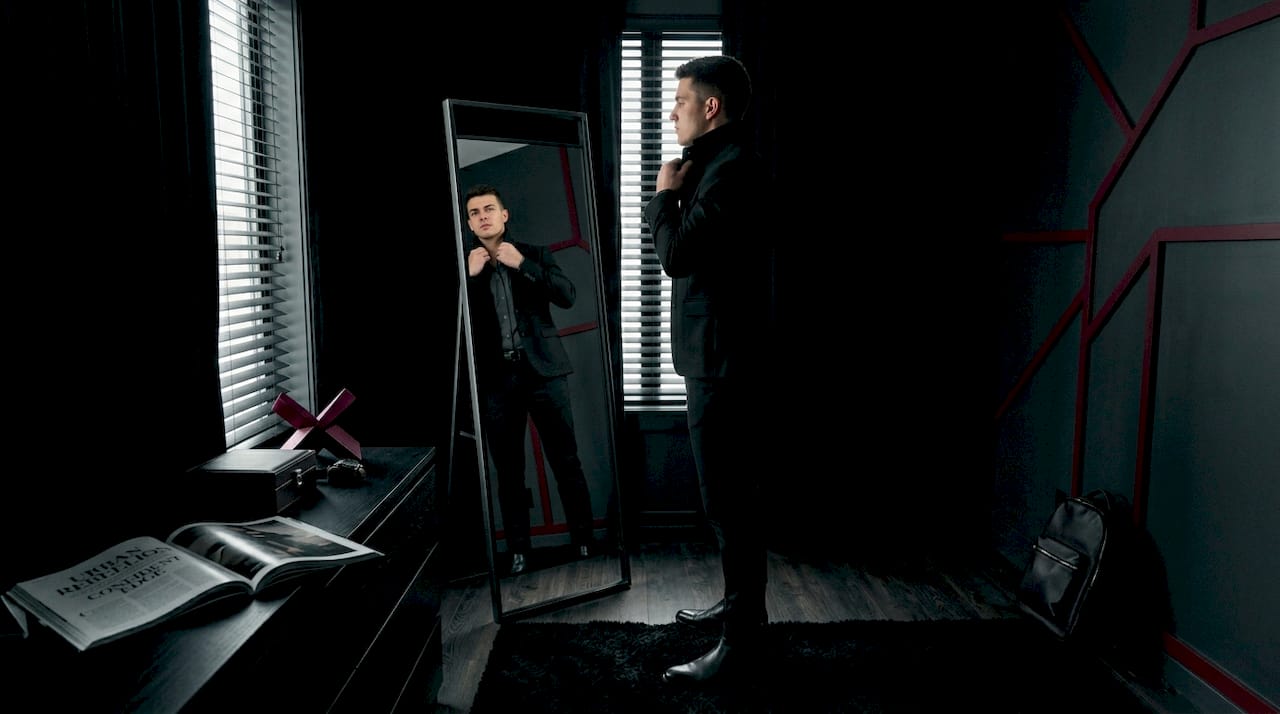
Fitted sportswear significantly boosts self-confidence compared to loose-fit equivalents, with real effects on psychological state during social and physical activity. This isn’t about aesthetics. It’s about how physical fit communicates to your own brain that you’re prepared and in control.
Well-fitting clothes reduce social avoidance and increase optimism, making people more likely to engage socially and be perceived positively. That’s a feedback loop worth taking seriously. Feeling good in what you wear makes you stand differently, speak more openly, and hold eye contact longer. Other people pick that up immediately.
How well-fitted clothing improves social interaction:
- Reduces self-consciousness so you spend less energy managing how you look and more energy being present
- Increases willingness to engage in new social situations, particularly with strangers
- Projects calm rather than agitation or overcompensation
- Boosts optimism about outcomes, which subtly raises how approachable you come across
| Clothing condition | Effect on wearer | Effect on others’ perception |
|---|---|---|
| Well-fitted | Higher confidence, less social anxiety | Reads as competent and approachable |
| Ill-fitted | Increased self-consciousness | Reads as careless or low effort |
| Clean and intentional | Emotional ease | Reads as trustworthy and put-together |
| Worn or mismatched | Distraction, discomfort | Reads as low effort or disorganized |
The clothing choices and reputation connection runs deeper than most people think. Over time, consistently intentional dressing signals that you take yourself and the spaces you enter seriously. That builds reputation in ways that a single standout fit never can.
Why trying too hard can backfire: authentic self-expression matters more
Here’s something the typical “dress for success” articles won’t say directly: the loudest outfits in the room are rarely the most respected ones. There’s a version of streetwear culture that confuses volume with voice. More logos, more layers, more flex. And it consistently undershoots.
Overdoing status symbols like obvious logos reduces warmth and likability. Subtle cues and genuine compliments do more for positive impressions than any branding statement. This runs against how a lot of streetwear is marketed, but it tracks with how people actually respond to each other in social spaces.
The brands that carry the most cultural weight in streetwear right now are largely built around restraint. A clean silhouette with intentional detailing signals that the wearer knows enough not to need external validation from a logo. That reads as confidence. Heavy branding reads as needing the brand to do the talking.
Mismatched trendy pieces signal low social awareness even when your intent is self-expression. Here’s how to think about it: true self-expression is coherent. It tells a story. When every element of your outfit is shouting a different thing, the story becomes noise. The people you’re trying to impress, whether they’re potential employers, partners, or just people worth knowing, are reading for coherence.
At Blaq Aesthetics, the design philosophy is built around exactly this tension. Bold without being loud. Intentional without being stiff. That balance is what makes a fit land.
The most useful advice about how style shapes impressions isn’t “wear nicer things.” It’s “wear things that mean something to you, and wear them like they fit.” Because they should.
Explore Blaq Aesthetics for streetwear that makes your first impression
You now have a clear picture of what actually shapes first impressions, and it’s not what most people assume. It’s fit, intention, coherence, and the quiet confidence that comes from wearing something you genuinely chose.
Blaq Aesthetics is built for exactly this. Every piece is designed to carry weight without noise. Whether you’re looking for a foundational layer or a single statement item, the collection gives you the tools to build fits that land. The BLAQ stitched zip hoodie is the kind of anchor piece that elevates everything around it, clean lines, intentional detailing, and a silhouette that actually fits. Pair it with the BLAQ distressed oversized t-shirt for a layered look that’s more considered than complicated. Less noise. Better impression.
Frequently asked questions
How quickly do people form first impressions based on clothing?
People form first impressions within 7 seconds or less, using clothing as the primary visual shortcut to judge traits like confidence, competence, and trustworthiness before a word is spoken.
Does wearing black always make you look confident?
Black is strongly associated with confidence and reliability, but a 2026 survey found it’s also linked to negative emotions like sadness in 78.6% of cases, so context and how you carry it matters significantly.
Do horizontal stripes make you look wider or thinner?
Despite the widespread belief that they widen, horizontal stripes are consistently perceived as thinner than non-striped equivalents across multiple cultures, making them a more flattering choice than conventional fashion advice suggests.
What matters more for first impressions: brand or fit?
Fit matters far more than brand labels. Proper tailoring signals discipline and real confidence, while flashy logos without good fit tend to read as overcompensation rather than status.
How can clothing affect my own confidence and social interactions?
Fitted, well-chosen clothes boost self-confidence and reduce social avoidance, meaning the way you dress directly influences how willing you are to engage socially and how positively others perceive those interactions.
